DigestivorePAD™ Process
Break Down Sludge Without
Breaking Your Budget
Ease your biosolids management headaches with a comprehensive solution: the DigestivorePAD™ process.
This advanced sludge treatment technology integrates an aerobic digestion step after anaerobic digestion to reduce nitrogen levels, prevent struvite scaling, and minimize sludge disposal.
The DigestivorePAD process helps wastewater treatment facilities meet effluent limits by reducing nitrogen in the side stream. It also reduces sludge management costs through improved volatile solids reduction (VSR). And it provides struvite stabilization and improves odor control.


THE PROBLEM
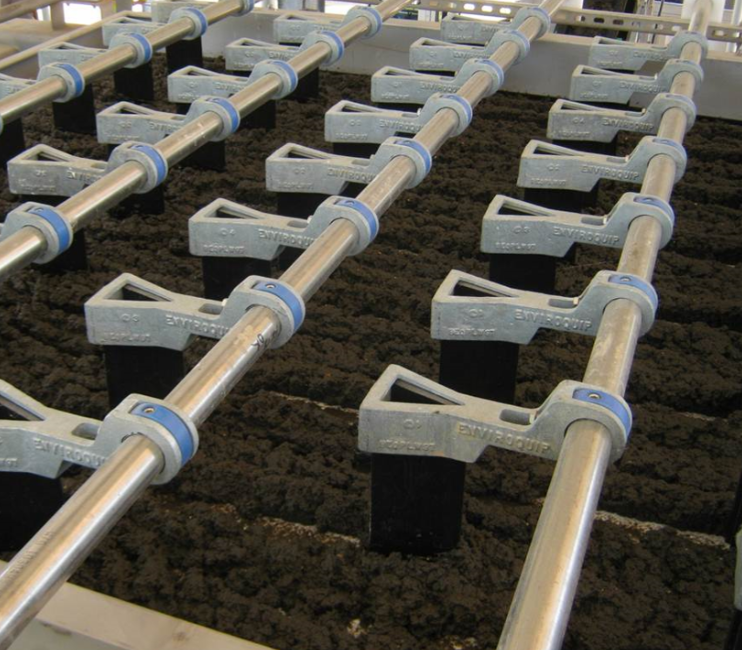
Wastewater treatment facilities often face numerous challenges:
- High biosolids management costs because of lack of VSR
- Meeting total nitrogen and phosphorus effluent limits
- Poor plant efficiency
- High operations and maintenance (O&M) costs because struvite scaling forms in piping, pumps, and dewatering equipment
- Odors in the dewatering building or at land application sites
Studies have shown that certain organic compounds in sludge digestion can only be degraded under anaerobic or aerobic conditions.
THE OVIVO SOLUTION
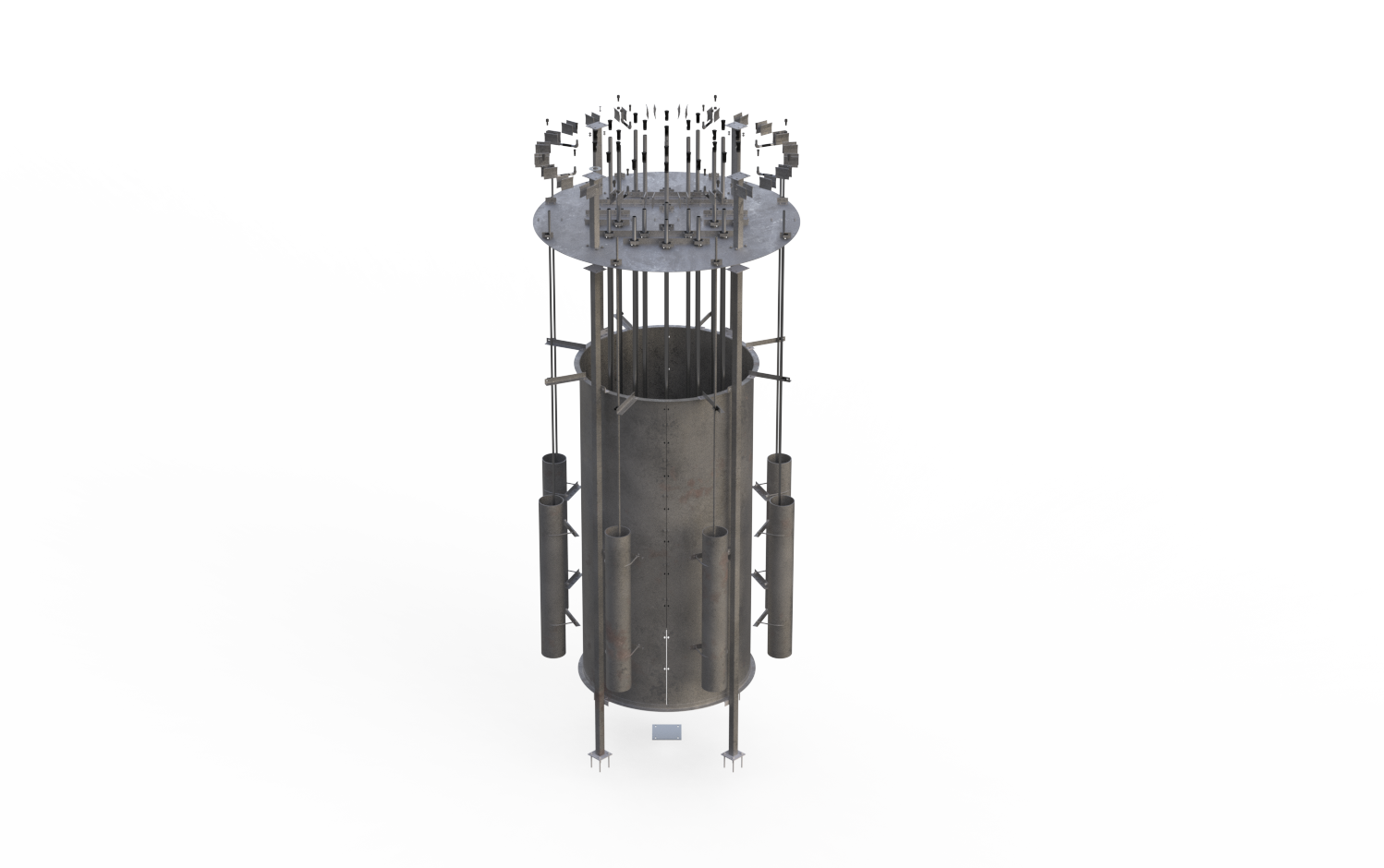
The DigestivorePAD process is a simple, easy-to-implement, comprehensive solution to common problems associated with biosolids management. It helps wastewater treatment facilities meet their effluent limits by reducing nitrogen in the side stream.
By combining anaerobic and aerobic digestion, the process enhances VSR up to 30%. The system reduces the chance of struvite scaling in process piping and on dewatering equipment, and because the aerobic treatment removes up to 80% of ammonia, odors are significantly reduced.
And the DigestivorePAD process can be retrofitted into existing sludge storage tanks, saving on capital and installation costs.

HOW IT WORKS
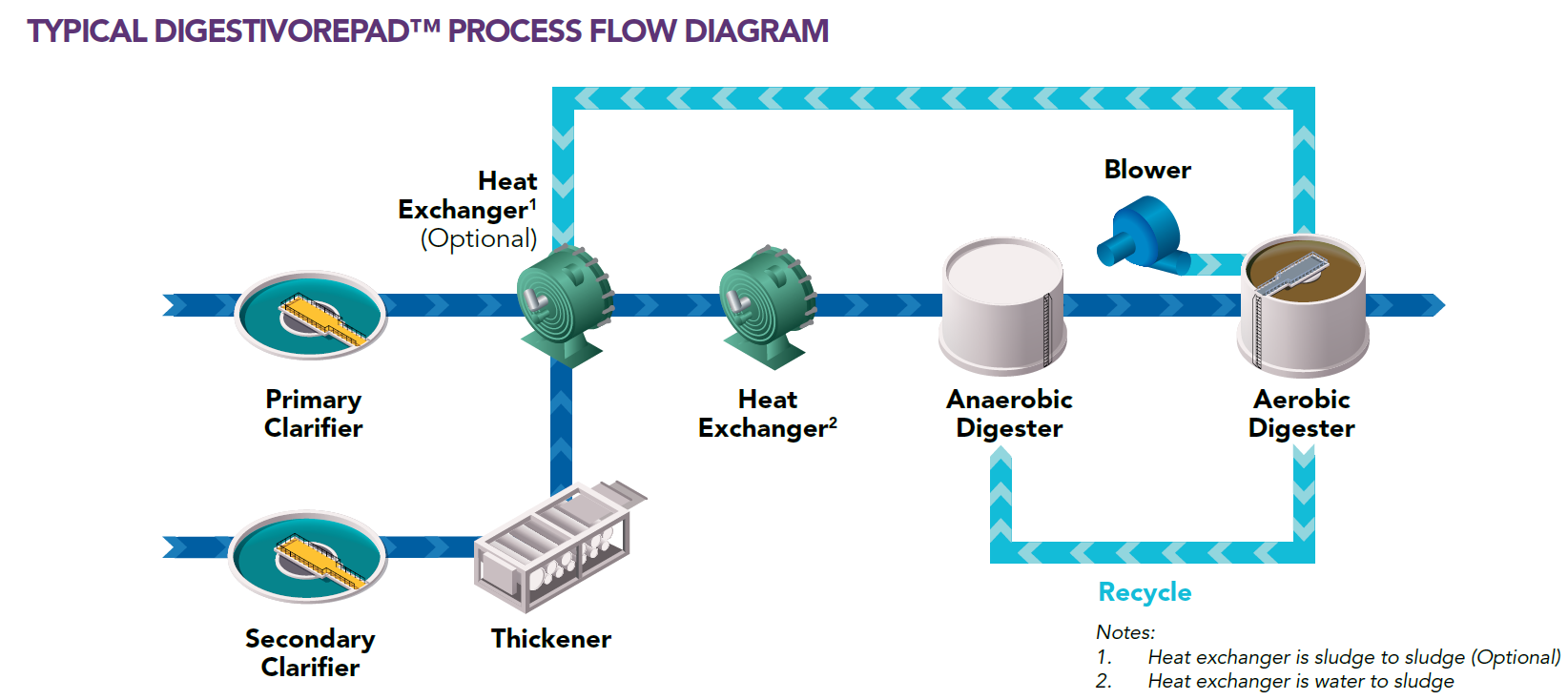
The DigestivorePAD process breaks down solid waste into two stages with an internal recycle.
- At the anaerobic digestion stage, sludge undergoes anaerobic digestion, a process that occurs without oxygen.
- At the post-aerobic digestion stage, sludge undergoes aerobic digestion, a process that occurs with oxygen, stripping sludge of CO2 and stabilizing pH, thereby reducing struvite scaling issues.
The combination of anaerobic and aerobic digestion provides enhanced volatile solids reduction.
In the end, up to 90% of ammonia nitrogen and total inorganic nitrogen (TIN) is removed in the side stream.
APPLICATIONS
- Municipal wastewater treatment plants
- Facilities that face stringent nitrogen discharge limits
- Facilities that need to lower biosolids management costs
BENEFITS & KEY FEATURES
Ammonia Reduction
About 80% reduction in the side stream.
Additional VSR
An additional 10% to 30% volatile solids reduction.
Struvite Stabilization
Prevents struvite scaling in process piping and dewatering equipment.
Odor Control
Minimal nuisance odors.
Better Dewatering
Potential improvement in dewatering efficiency.
Retrofit Capability
Ideal for retrofitting in existing tanks, saving on capital and installation costs.


SUPPORT / PARTS & SERVICES
For aftermarket support
1 855-GO-OVIVO (1-855-466-8486)
OEM Parts
Ovivo USA, LLC – Utah
4246 Riverboat Road, Suite 300
Salt Lake City, UT 84123
Ovivo USA, LLC – Texas
2300 Greenhill Drive, #100
Round Rock, TX 78664
Contact Ovivo to learn about building an efficient water treatment solution that benefits your bottom line.